
How to Track Business Expenses for Tax: A Practical Guide

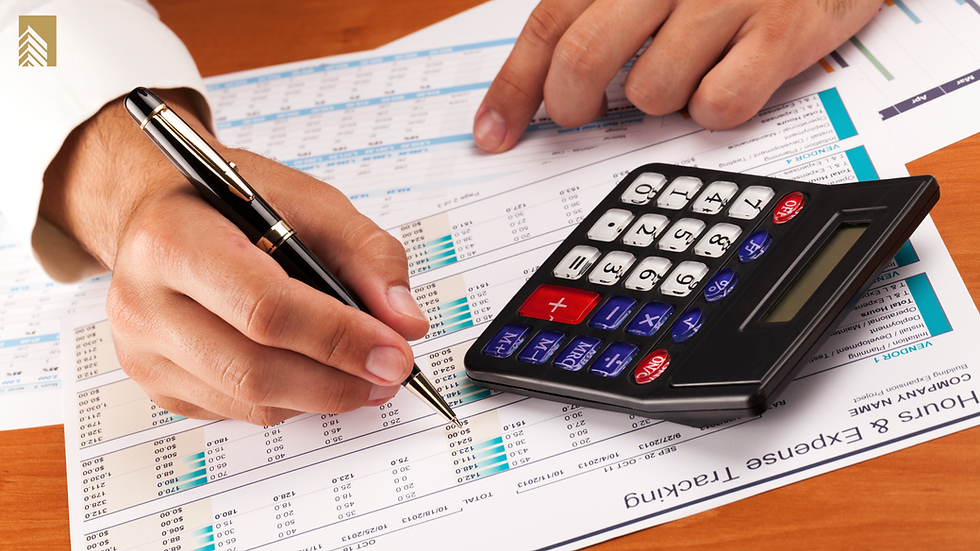
Keeping track of expenses for tax purposes comes down to capturing every business-related cost as it happens, backing it up with a receipt or invoice, and recording it in one consistent system throughout the year, rather than trying to reconstruct it all at tax time.
Key Takeaways
Record Expenses Immediately: Capture costs, take photo receipts, and link details on the spot using cloud accounting apps or the ATO app rather than relying on memory or end-of-year catch-ups.
Keep Finances Separate: Use a dedicated business bank account and card to simplify reconciliation, protect tax position, and maintain clean audit trails.
Ditch the Spreadsheets: Cloud software with direct bank feeds automates categorisation, prevents missed transactions, and keeps documentation attached to entries.
Understand Deduction Rules: Correctly categorize full, partial (mixed-use like vehicles/home offices), and capital expenses, keeping valid receipts/invoices and logbooks.
Maintain Ongoing Discipline: Reconcile monthly and review quarterly to catch errors early, track performance, simplify BAS lodgements, and avoid stress at tax time.
Why This Matters More Than Most Business Owners Realise
Poor expense tracking costs you in two ways.
First, you miss deductions you're entitled to, because a receipt got lost or a cost never made it into your records.
Second, if the ATO ever reviews your return, gaps in your documentation put the deduction at risk, even if the expense was genuinely business-related.
Getting the system right from the start protects both your tax position and your time, since chasing down twelve months of receipts in June is far harder than logging them as you go.
There's also a compounding effect worth considering. When expense tracking is inconsistent throughout the year, errors tend to build on each other.
A missed transaction in July gets forgotten by August, a miscategorised expense in September throws off your quarterly figures, and by the time your return is due, you're not just dealing with one gap, you're dealing with a pattern of small ones that add up to a meaningfully understated deduction claim.
Separate Your Business and Personal Finances
This is the starting point for almost everything else. If business and personal spending run through the same account or card, every reconciliation becomes a judgement call about what counts and what doesn't.
A dedicated business account and card makes categorisation faster and gives you a cleaner audit trail if you're ever asked to substantiate a claim. It also makes handing records to a bookkeeper or accountant far simpler, since they're not sorting personal transactions out of your business ledger.
This separation matters even for sole traders, where there's no legal requirement to keep the finances apart.
Even so, mixing the two makes bank reconciliation slower and increases the risk that a personal expense gets claimed by mistake, or a legitimate business cost gets missed because it's buried among personal transactions.
Setting up a separate account, even a basic one, tends to pay for itself in the time it saves later.
Record Expenses as They Happen, Not Later
Expenses are easiest to categorise correctly when they're fresh. Waiting until the end of the quarter, or worse, the end of the year, means you're relying on memory to work out what a transaction was for.
Most accounting software lets you photograph and attach a receipt to a transaction within seconds, so building that into your routine, rather than leaving it for a batch session later, keeps your records accurate and current.
A simple habit that works well is dealing with receipts immediately after the purchase, rather than letting them pile up in a wallet, glovebox, or inbox.
Taking a photo on the spot and attaching it to the transaction in your accounting app removes the risk of losing paper receipts entirely, and it means the context around the purchase, what it was for and which client or project it relates to, is still fresh in your mind when you record it.
For sole traders in particular, the ATO app is worth setting up alongside whatever accounting software you use. It has a section for recording expenses and deductions as they occur, and if you link it to your TFN, that information feeds automatically into your tax return.
It's a useful backstop for smaller operators who might not need full accounting software but still want a reliable way to capture deductions as they happen, rather than relying on memory or a shoebox of receipts at tax time.
Use Accounting Software Rather Than Spreadsheets
Spreadsheets work for very small operations, but they don't scale well and they're prone to manual error. Cloud accounting software connects directly to your bank feed, categorises transactions automatically based on rules you set, and stores digital copies of receipts against each entry.
That means your records are already organised by the time your accountant or bookkeeper reviews them, rather than needing to be rebuilt from a shoebox of paper.
Beyond the basic categorisation, most cloud platforms also let you tag expenses by project, client, or cost centre, which is useful if you need to report on profitability at a more granular level than your total tax return requires.
Bank feeds also reduce the risk of a transaction being missed entirely, since every debit and credit from your business account flows into the software automatically, rather than depending on you remembering to enter it manually.
Know What Counts as a Deductible Expense
Not every business cost is fully deductible, and getting this wrong in either direction causes problems. Some expenses are deductible in full, others only partially, particularly where there's a private use component, like a phone or vehicle used for both business and personal purposes.
If you're unsure whether something qualifies, or how much of it does, it's worth checking with your accountant rather than guessing, since incorrect claims can trigger a review down the track.
Common categories worth understanding include operating expenses like rent, utilities, and software subscriptions, which are generally fully deductible when used wholly for business.
Then there are mixed-use expenses, such as a car used for both client visits and personal errands, or a home office used outside of work hours, where only the business-use portion can be claimed.
Capital expenses, like equipment or vehicles above a certain value, are often treated differently again, sometimes depreciated over several years rather than claimed in full upfront. Understanding which category an expense falls into at the time you record it saves a lot of reworking later.
Keep the Right Documentation for Each Expense
A bank statement line isn't enough on its own. For most expenses, you need the actual receipt or tax invoice showing what was purchased, the amount, the GST component if applicable, and the supplier's details.
For larger or ongoing costs, like vehicle use or a home office, you'll also need supporting records such as a logbook or a reasonable basis for the percentage you're claiming. Storing these digitally alongside the transaction, rather than in a separate folder, makes them far easier to produce if needed.
For vehicle expenses specifically, the ATO generally expects either a logbook kept over a representative twelve-week period, or reliance on the cents-per-kilometre method, depending on which approach suits your situation.
For a home office, you'll need to show how you calculated the business-use percentage of running costs like electricity and internet, rather than applying an arbitrary figure. These are the kinds of details that are far easier to capture accurately at the time than to reconstruct months later.
Reconcile Your Accounts Regularly
Reconciling monthly, rather than once a year, catches errors and missing transactions while they're still easy to trace back. It also means you're never facing a backlog of twelve months' worth of categorisation right before your return is due.
A regular reconciliation habit turns tax time into a review of already-accurate records, rather than a scramble to build them from scratch.
Monthly reconciliation also gives you an ongoing, accurate picture of how the business is actually performing, rather than a picture that's only current once a year.
That makes it easier to spot spending patterns early, catch duplicate charges or subscription costs you've forgotten to cancel, and make informed decisions throughout the year instead of only in hindsight.
Set Aside Time for a Quarterly Review
Even with good day-to-day habits, it's worth stepping back every quarter to check that expenses are categorised consistently and nothing has been missed.
This is also a good point to flag anything unusual to your accountant, rather than surfacing it for the first time at year end, when there's less room to address it properly.
A quarterly review is also a natural checkpoint for BAS lodgement if you're registered for GST, since it forces a closer look at your records at a point where errors are still easy to correct.
Treating these reviews as a fixed part of your calendar, rather than something you get to when time allows, is what keeps the habit consistent through busy periods.
Common Mistakes to Avoid
A few patterns show up repeatedly in businesses that struggle with expense tracking.
Claiming private expenses without apportioning the business-use percentage. This is one of the most common mistakes, particularly with phones, internet, and vehicles used for both business and personal purposes.
Losing receipts for cash purchases. Cash transactions don't leave the same automatic trail as card payments, which makes them easy to forget and hard to substantiate later.
Letting records lapse during busy periods, then trying to catch up all at once. This is perhaps the most damaging habit of all, since it's exactly when errors and omissions are most likely to occur.
Conclusion
Good expense tracking isn't about a single tool or a once-a-year effort. It's built from consistent habits: separating business and personal finances, recording expenses as they happen, using software that keeps documentation attached to each transaction, and reviewing your records regularly rather than leaving everything until tax time.
Firms and business owners who build this rhythm into their routine spend less time reconstructing records under pressure, and have a stronger position if their claims are ever reviewed.
Ready to Keep Your Records Tax-Ready All Year?
Building good habits around expense tracking is one thing. Keeping them consistent every month, especially during busy periods, is where most businesses fall down. BOS Resources can take reconciliation and categorisation off your plate, so your records stay accurate and audit-ready without adding to your workload.
Get in touch with BOS Resources today.
Frequently Asked Questions
What's the easiest way to track expenses for tax purposes?
Using cloud accounting software connected to your business bank account is generally the easiest approach. It automatically pulls in transactions, lets you attach receipts, and categorises spending, which removes most of the manual work involved in spreadsheet-based tracking.
Do I need to keep paper receipts, or are digital copies enough?
Digital copies are generally accepted, provided they're a clear and complete record of the original, including the amount, supplier, and what was purchased. Most accounting software allows you to photograph and store receipts directly against each transaction.
How long do I need to keep expense records?
Businesses are generally required to keep records for five years from the date they were prepared, obtained, or the transaction completed, whichever is later. Keeping digital records makes this far more manageable than storing physical paperwork.
What happens if I can't find a receipt for a claimed expense?
Without adequate documentation, a deduction can be disallowed if reviewed, even if the expense was genuinely business-related. This is why building a habit of recording expenses as they happen matters more than trying to piece together records later.
Should I track expenses myself or outsource it to a bookkeeper?
That depends on the volume of transactions and the time you have available. Many business owners handle day-to-day recording themselves but bring in a bookkeeper for reconciliation and categorisation, particularly once transaction volume grows beyond what's manageable alongside running the business.


Comments